Bringing More Care Closer to Home: WCCH and Delegate Mitchell Look Ahead for Rural Healthcare
November 19, 2026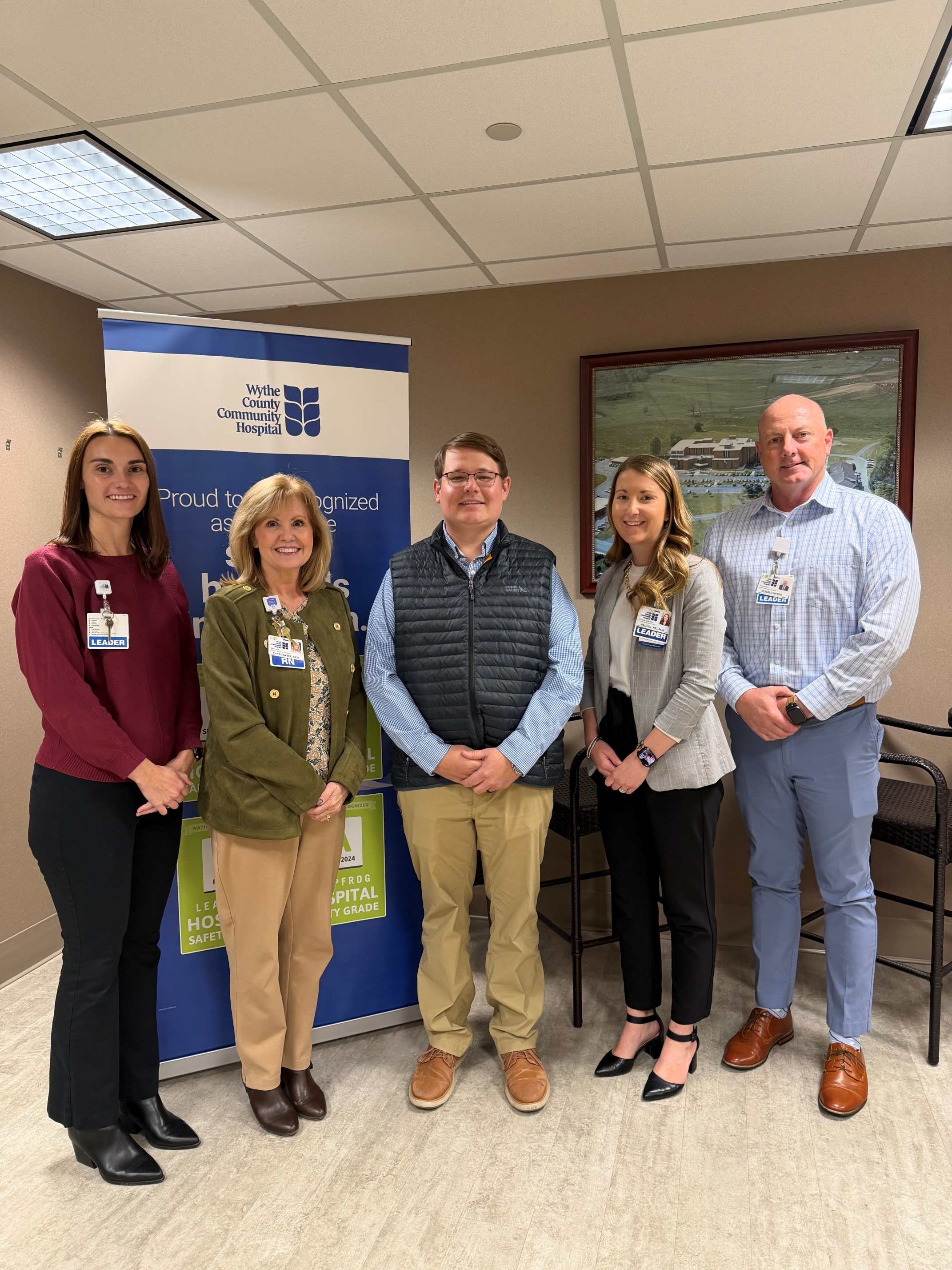
WYTHEVILLE, Va. November 2026- As healthcare continues to evolve, rural communities are finding new ways to connect patients with services, prepare the next generation of healthcare professionals and use technology to make care more accessible.
Those opportunities were at the center of a recent conversation at Wythe County Community Hospital, where Delegate Cornett Mitchell met with hospital leaders to discuss the future of healthcare in Southwest Virginia and ways hospitals, educators and state leaders can work together to serve rural communities.
From specialty care and telehealth to student training and community partnerships, the conversation highlighted work already taking place locally while exploring what could come next.
For Theresa Dix, CEO of Wythe County Community Hospital, one goal remains consistent: helping patients receive appropriate care as close to home as possible.
“Our goal is to provide as many opportunities as we can for patients to receive the care they need right here in their own community,” Dix said.
Today, WCCH uses a combination of local providers, advanced practice providers, visiting specialists and telehealth to connect patients with a broader range of healthcare services. Mitchell emphasized the value of expanding local options so rural residents can spend less time traveling long distances for care.
“The more services we can provide within our rural communities, the better,” Mitchell said. “When patients can access quality care closer to home, it reduces the need to travel long distances to larger cities.”
Creating opportunities for the next generation of healthcare professionals
The conversation also turned to opportunities for growing the region's healthcare workforce, beginning with students who may one day choose to build their careers in Southwest Virginia.
WCCH already serves as a training site for students pursuing a variety of healthcare careers. Medical students through VCOM, along with physician assistant, nurse practitioner, nursing and laboratory students, are among those who can gain hands-on experience in the hospital and community.
For students, those experiences offer more than clinical education. They provide an opportunity to see what practicing healthcare in a rural community looks like and to build connections with the region early in their careers.
WCCH also participates in an initiative through the Bland Foundation designed to encourage medical students to return to the area to practice after completing their education. Dix shared that the effort has helped bring physicians back to the region, including providers in pediatrics and family medicine.
Mitchell discussed other programs being used to encourage professionals to establish careers in Southwest Virginia and raised the possibility that successful incentive models in other professions could offer ideas for healthcare as well.
Community colleges can also play an important role by expanding opportunities for students interested in healthcare professions.
“Our community colleges are an important part of the solution,” Mitchell said. “Continuing to expand healthcare education and training opportunities can help more people build their careers right here in Southwest Virginia.”
The discussion included opportunities in nursing, respiratory care, imaging, paramedicine and other healthcare fields that support patient care throughout the region.
Together, those efforts create something larger than a recruitment strategy. They give local students more pathways into healthcare careers while strengthening connections among schools, colleges, healthcare organizations and the communities they serve.
Technology creates new possibilities for local care
Technology was another area where the conversation quickly moved from what is already working to what may be possible next.
WCCH currently incorporates telemedicine into urology care, combining local support with physician expertise to help patients access care closer to home.
That experience led the group to discuss where telehealth could be used in other ways throughout the community.
One possibility is reconnecting with local schools to explore opportunities for pediatric telehealth. WCCH previously considered technology that could allow students to connect with healthcare providers from a school setting, and Dix said recent conversations with local education leaders have renewed interest in the concept.
Mitchell pointed to a school-based healthcare model in Grayson County as another example of how communities can think differently about access.
For rural communities, technology can help make distance less of a barrier. Telehealth does not replace in-person care, but when used appropriately, it can complement the physicians, advanced practice providers and other healthcare professionals already serving patients locally.
That creates additional ways for patients to connect with care while keeping the relationship with their hometown healthcare community at the center.
Strong healthcare supports a strong community
The conversation eventually moved beyond what happens inside a hospital or clinic and toward the role healthcare plays in the overall strength of a community.
Mitchell emphasized that strong local healthcare is an asset not only for patients, but also for communities working to attract new residents and economic investment.
“Having strong healthcare close to home is important not only to the people who live here, but also to the businesses and families considering making this community their home,” Mitchell said.
He also highlighted the value of hospitals maintaining a visible presence beyond their walls through schools, local programs and community partnerships.
“Having a strong presence in the community builds trust,” Mitchell said. “When people see their hospital involved in schools, local programs and the community, that connection matters.”
That community connection is something Dix said WCCH wants patients to experience when they seek care.
“My goal for our clinics is to always look for a way to say yes,” Dix said. “If someone walks through our doors needing care, we want to do everything we can to get them seen and taken care of.”
Mitchell agreed that making healthcare easier to navigate can make a meaningful difference, particularly for patients who might otherwise put off seeking care.
“Anything we can do to make healthcare easier for people to access and navigate is a step in the right direction,” Mitchell said.
Looking ahead together
The conversation at WCCH demonstrated that the future of rural healthcare is about more than any single hospital, provider or program. It depends on partnerships.
Hospitals can introduce students to healthcare careers. Schools and colleges can create pathways into those careers. Technology can connect patients and providers in new ways. State leaders can help communities explore programs and investments that support access. And local healthcare organizations can continue finding ways to meet patients where they are.
Before leaving, Mitchell encouraged WCCH leaders to keep those conversations going.
“We’ll do all we can to help,” Mitchell said. “I encourage you to continue reaching out and letting us know where we can be supportive.”
For WCCH, looking ahead means building on the care, partnerships and resources already present in Wythe County while continuing to explore new opportunities for the people who call the region home.
Because bringing more care closer to home is not simply about preparing for the future of rural healthcare. It is about investing in the health and future of the community itself.